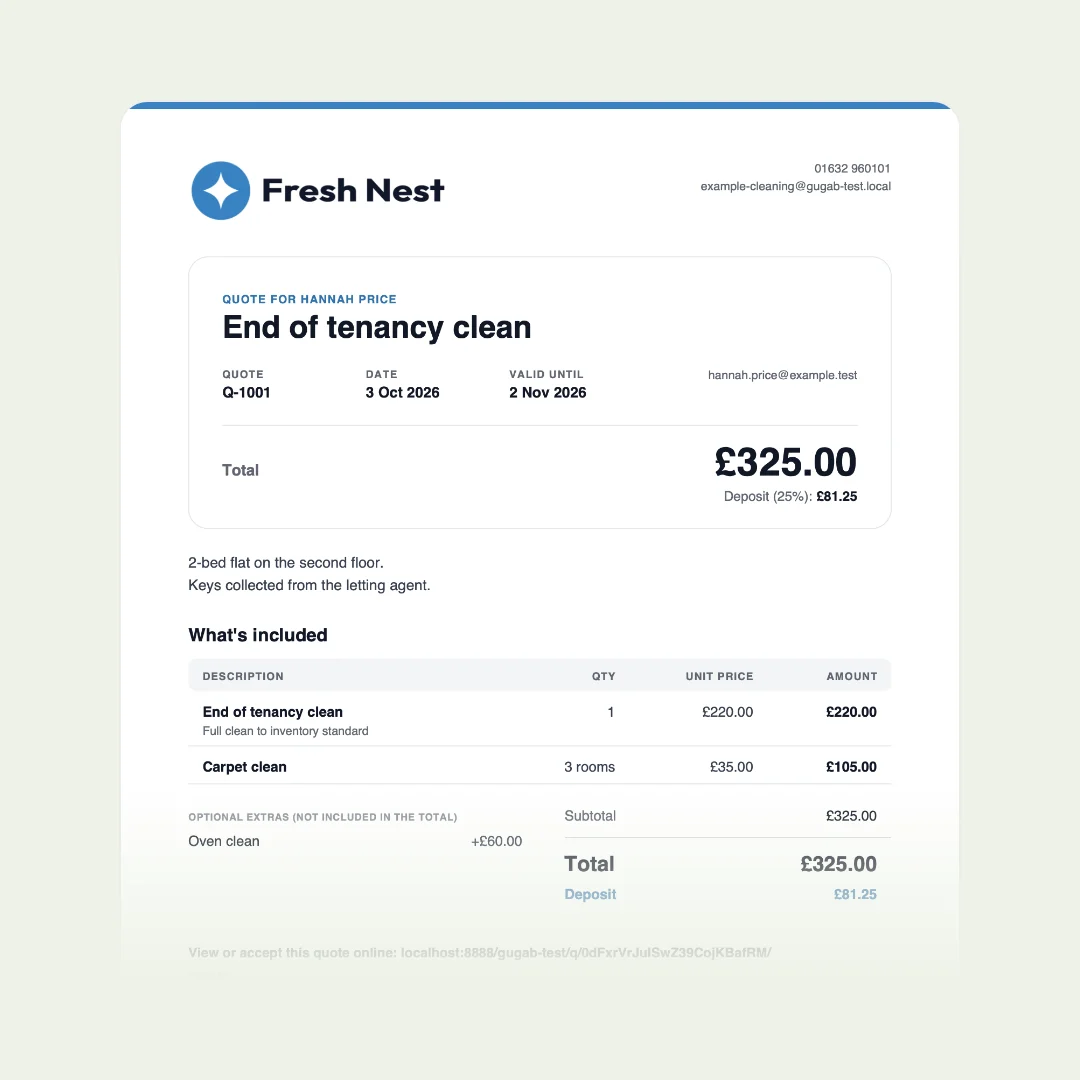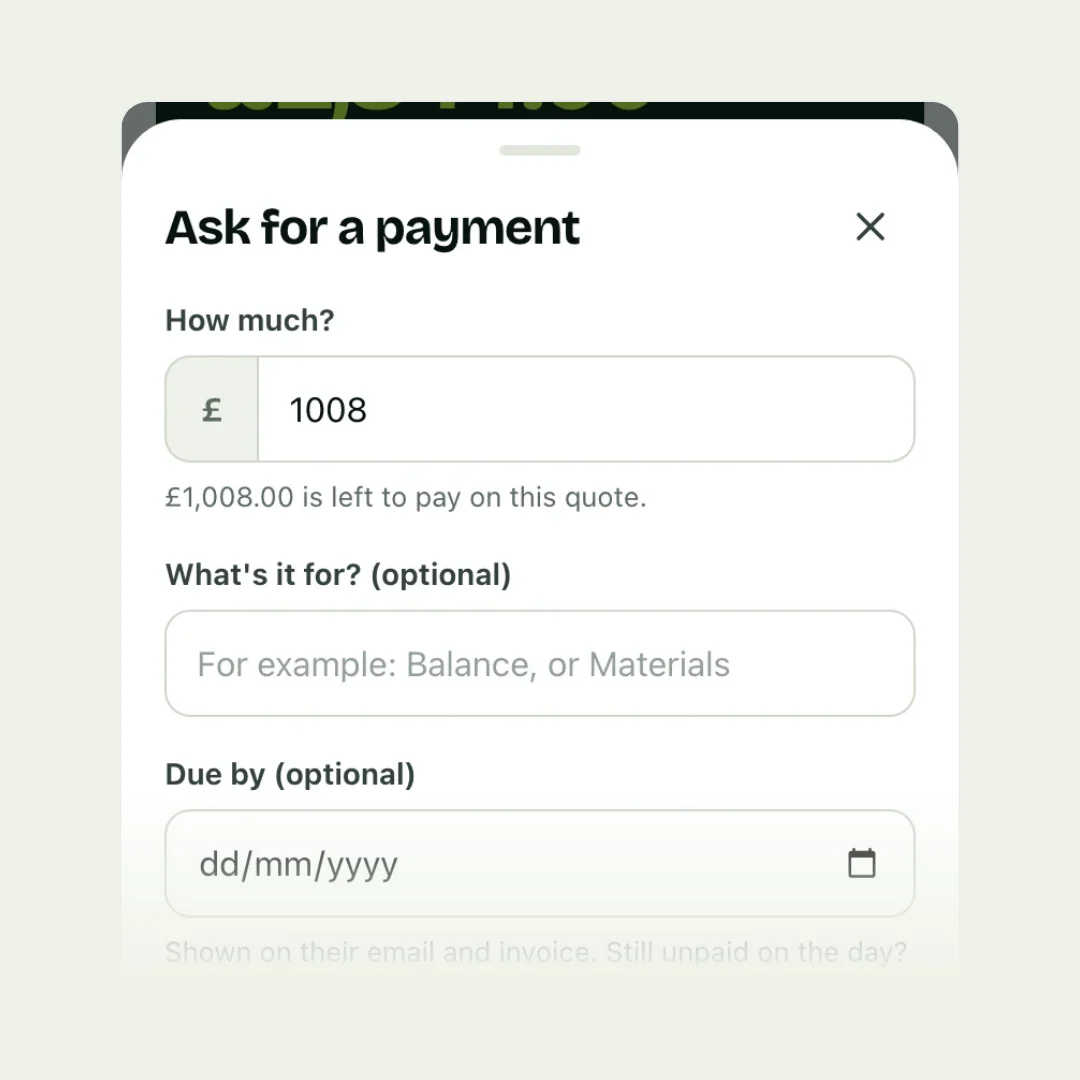
Stage payments split a bigger job’s price into parts paid as the work progresses: usually a deposit before you start, one or more payments as each stage is finished, and a balance at the end. Agree the stages, amounts and triggers on the quote, ask for each payment as soon as its stage is done, and keep the final payment large enough that both sides want to finish well.
Deposit, stage payments and balance
| Payment | When | What it is for |
|---|---|---|
| Deposit | On acceptance | Books the work, covers early costs |
| Stage payment | When a stage is done | Pays for the work finished so far |
| Balance | On completion | The rest of the price |
For how much to take up front, see our guide to deposits.
When to use stage payments
- The job runs for more than a couple of weeks.
- You pay out a lot before the end, for materials, hire or help.
- The price is large for the customer to pay in one go.
- The work happens in clear steps, each of which the customer can see.
For a one-day job, a deposit and a balance are enough.
How to set up a schedule
- Split the job at points the customer can see: “groundwork done”, “first draft delivered”, “kitchen fitted”. Avoid vague names such as “phase two”.
- Match payments to your costs, so you are never funding the customer’s job for long.
- Keep the last payment meaningful, often 10% or more, so finishing well matters to both sides.
- Set a trigger and a due date for each, such as “due within 7 days of the stage being finished”.
- Put it all on the quote, before the customer accepts.
Example schedules
Garden makeover, £6,000, about three weeks
| Stage | When | Share | Amount |
|---|---|---|---|
| Deposit | On acceptance | 20% | £1,200 |
| Paving and walls done | End of week 1 | 40% | £2,400 |
| Planting and turf done | End of week 2 | 30% | £1,800 |
| Balance | On completion | 10% | £600 |
Wedding photography, £2,400
| Stage | When | Share | Amount |
|---|---|---|---|
| Booking fee | On booking | 25% | £600 |
| Second payment | 30 days before the wedding | 50% | £1,200 |
| Balance | When the photos are delivered | 25% | £600 |
Freelance project, £8,000, two months
| Stage | When | Share | Amount |
|---|---|---|---|
| Start | On acceptance | 30% | £2,400 |
| First draft | When delivered | 40% | £3,200 |
| Final delivery | When signed off | 30% | £2,400 |
For building work, the same pattern applies with more stages, such as foundations, walls, roof, first fix and finish, each tied to work the customer can see.
Wording for your quote
Asking for each payment
Ask the day the stage is finished, while the work is fresh in the customer’s mind. Show what was done, say what is due, and make paying easy.
When a stage payment is late
- Send a friendly reminder with the amount and the link on the day it is due.
- Follow up a few days later, by phone if the job is large.
- Talk before you act. Most late payments are forgotten, not refused.
- Check your terms and local rules before pausing work. What you can do depends on what you agreed and where you are.
Common mistakes
- Payments that run ahead of the work, which worries customers and can break local rules.
- Vague stages, so nobody agrees when one is finished.
- Waiting to ask until the end of the job.
- A tiny final payment, which leaves little reason to finish the last details.
- No invoice for each payment, which makes your records and the customer’s harder.
The easy way: every stage in two taps
| By hand | With Gugab | |
|---|---|---|
| Asking | Write an invoice, send it | Ask for a payment: two taps |
| Paying | Bank transfer and a reference | Card, from the same link |
| Paid so far | A spreadsheet | Always on the quote |
| Invoices and receipts | Written by you | Made for you |
| Late payments | Your memory | Reminders by themselves (Pro) |
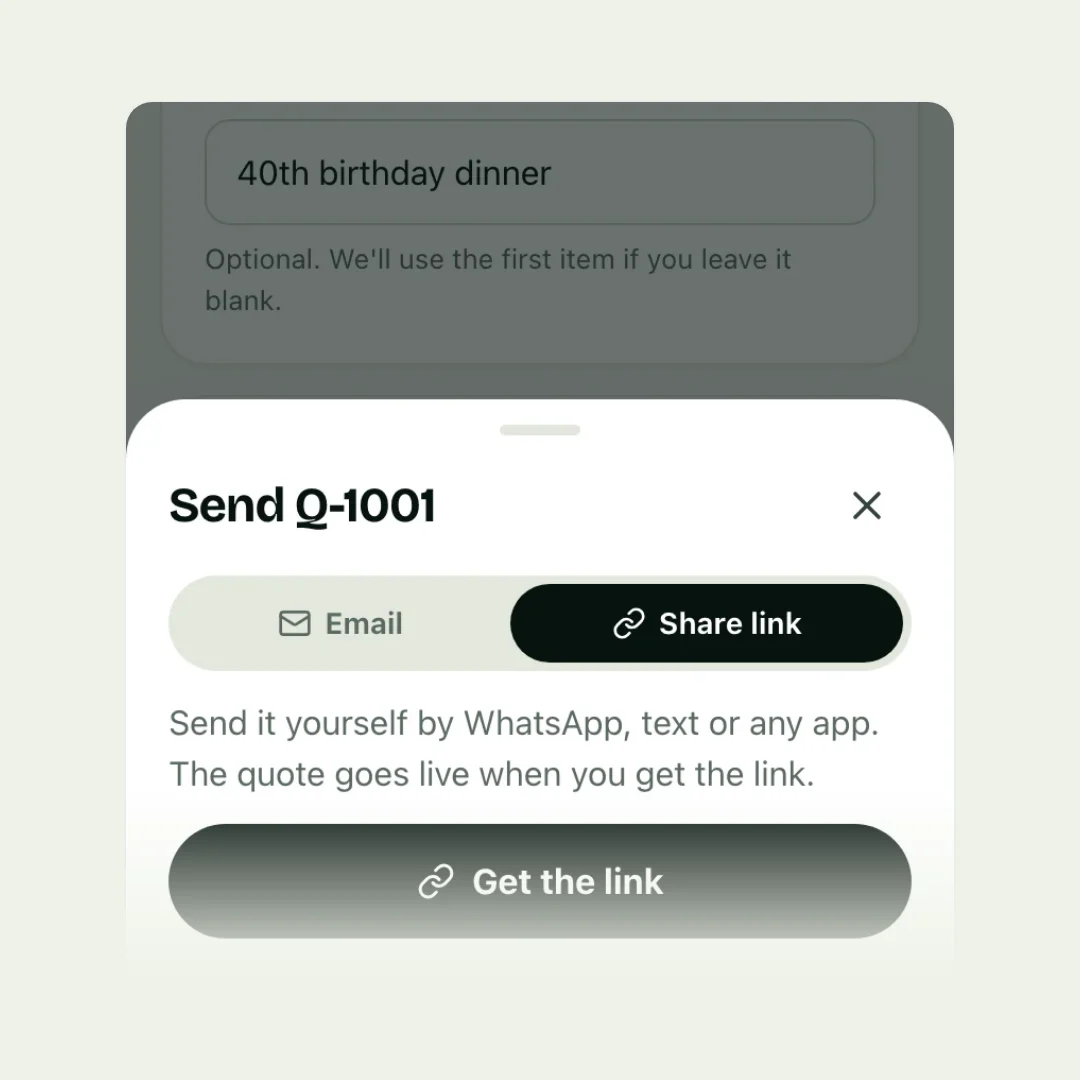
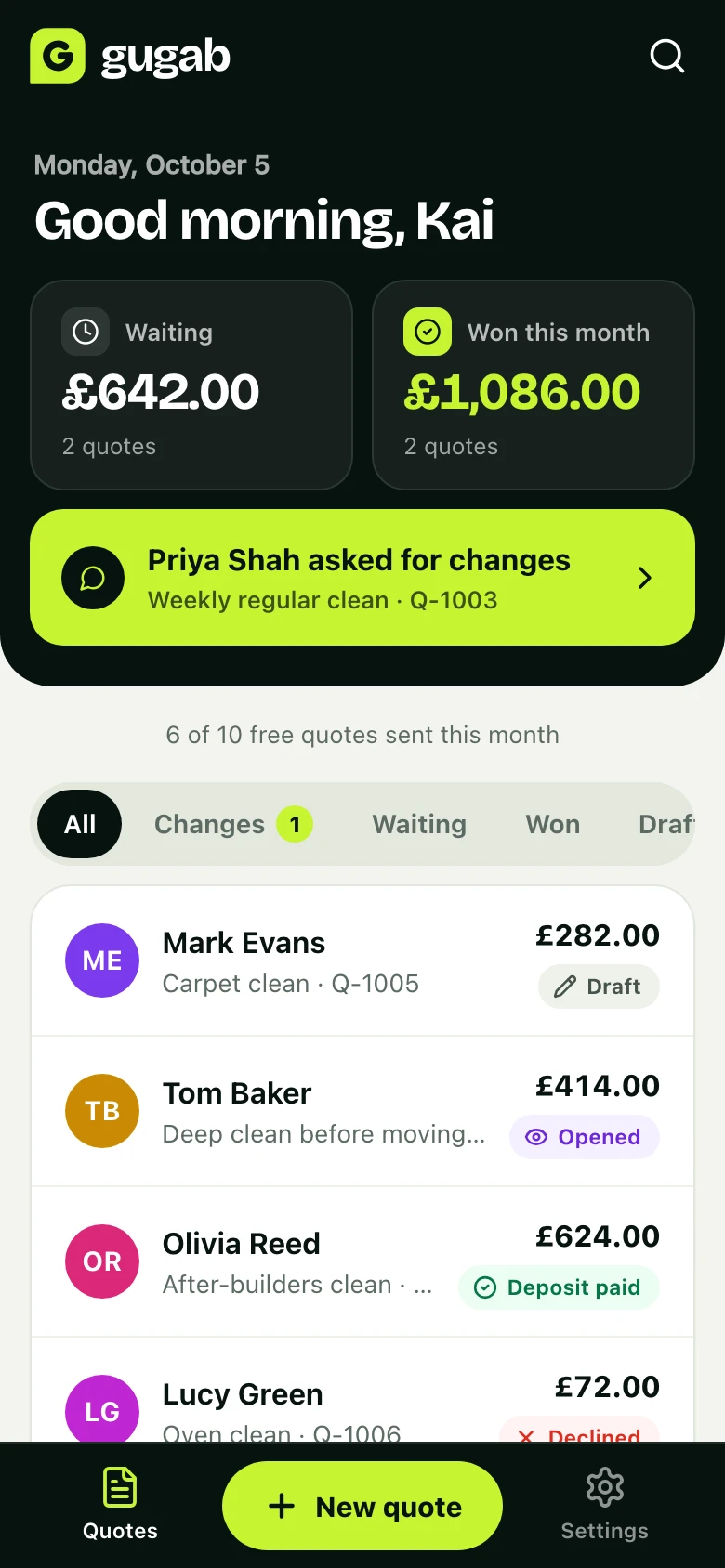
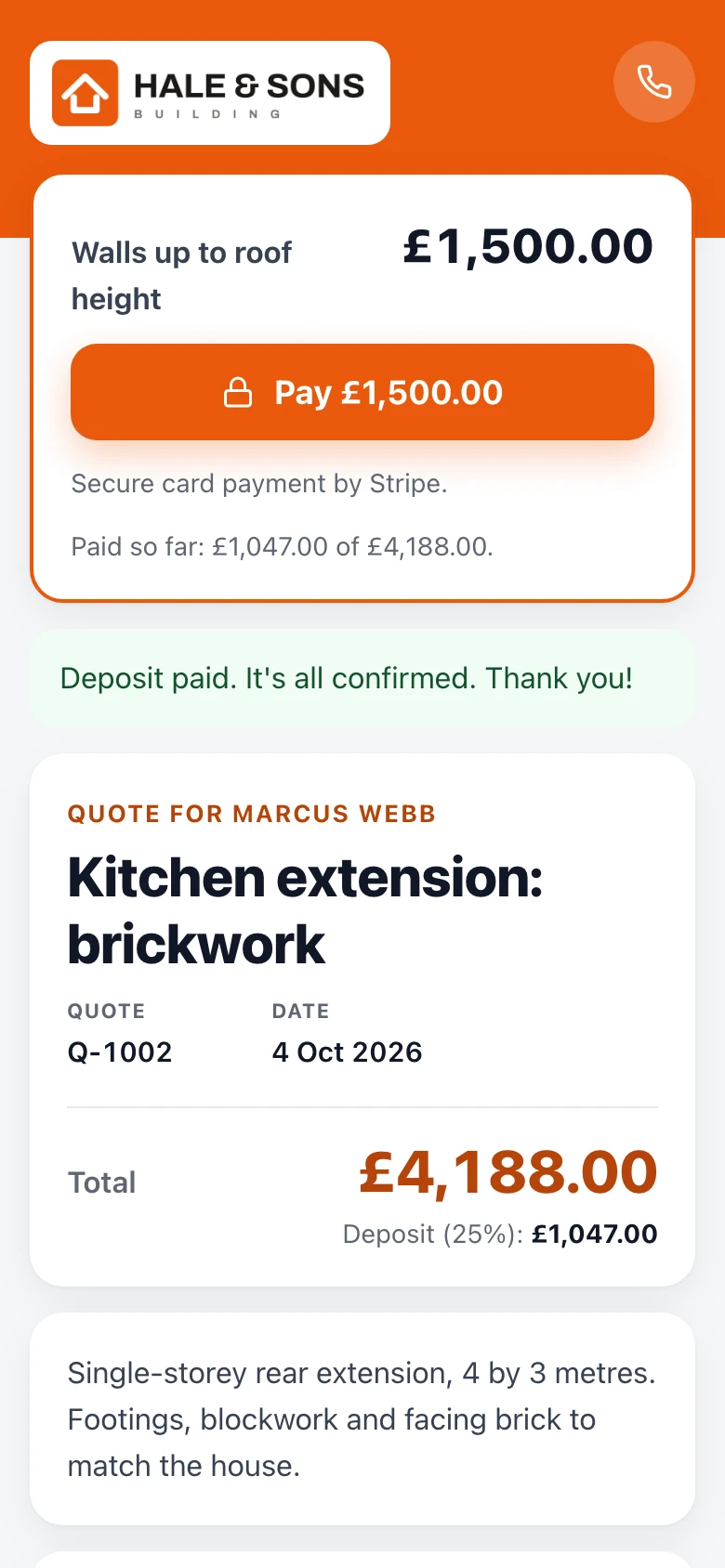
Once a quote is accepted and the deposit is settled, open it in Gugab and tap “Ask for a payment”. Choose a stage payment or the whole balance, and add a due date if you like. The customer gets an email and pays from the same link as their quote, by card; their invoice and receipt are made for you, and the quote always shows what has been paid and what is left. On Pro, a payment that isn’t made gets reminders by itself.
Questions people ask
What is the difference between a deposit and a stage payment?
A deposit is paid before work starts, to book it and cover early costs. Stage payments are paid as parts of the work are finished. The balance is the final payment at the end.
How many stages should a job have?
As few as make sense: usually a deposit, one to three stages and a balance. Each stage should be something the customer can see is done.
Can I ask for a stage payment before starting that stage?
You can agree it, for example to buy materials for that stage, but it should be on the quote from the start. As a rule, payments should not run far ahead of the work done.
What if the customer disputes that a stage is finished?
Define each stage clearly on the quote, such as "turf laid" rather than "phase two", and show the customer the finished stage, with photos if they aren't there. Clear stages prevent most disputes.
Do I need to send an invoice for each stage?
It is good practice, and in many places businesses registered for tax must issue one. Each payment should come with an invoice or receipt showing what it was for and what is left to pay.
What is a retention?
Part of the price held back until after the job, to cover any problems that show up. Retentions are common in larger building contracts and rare for small jobs. If you agree one, write down how much and when it is paid.