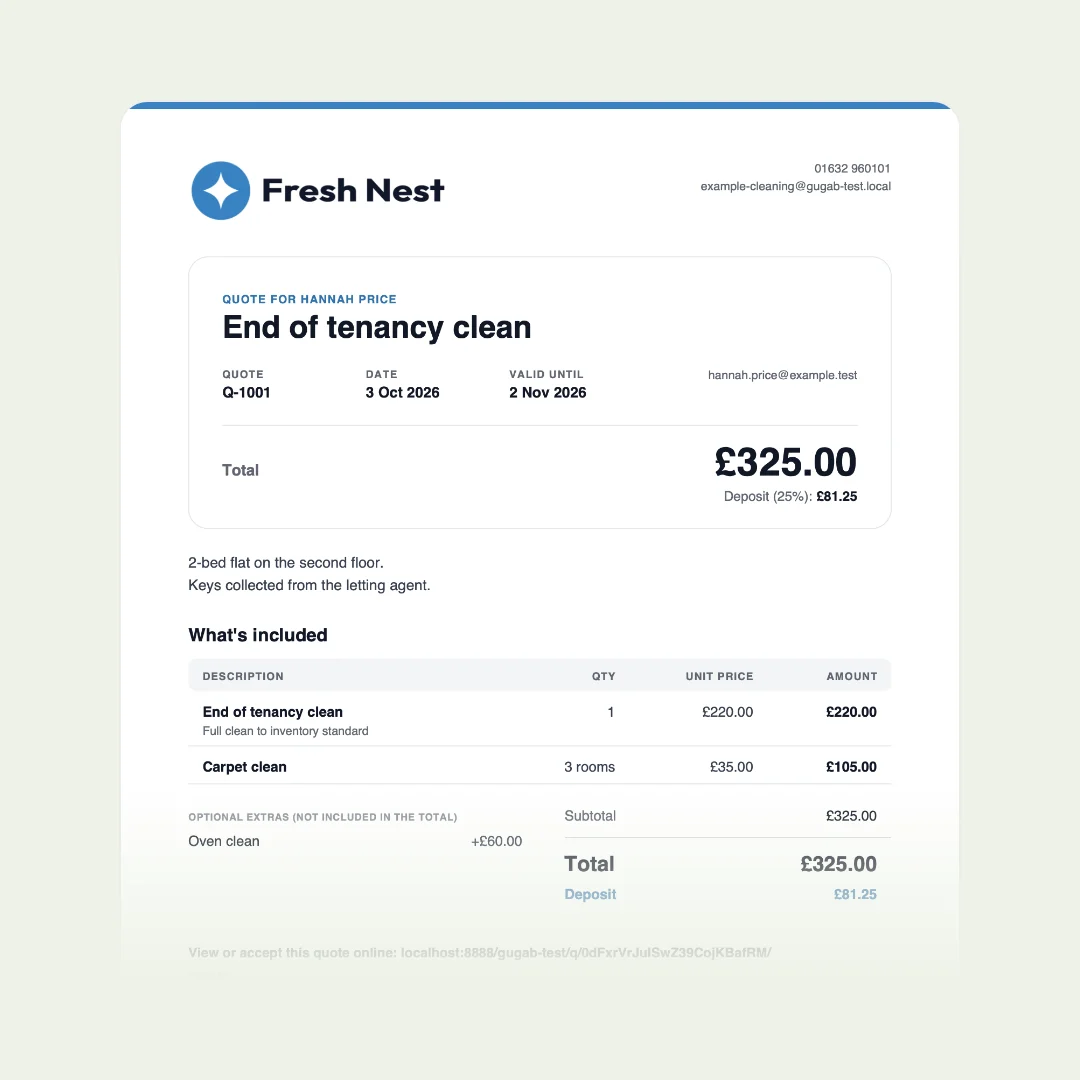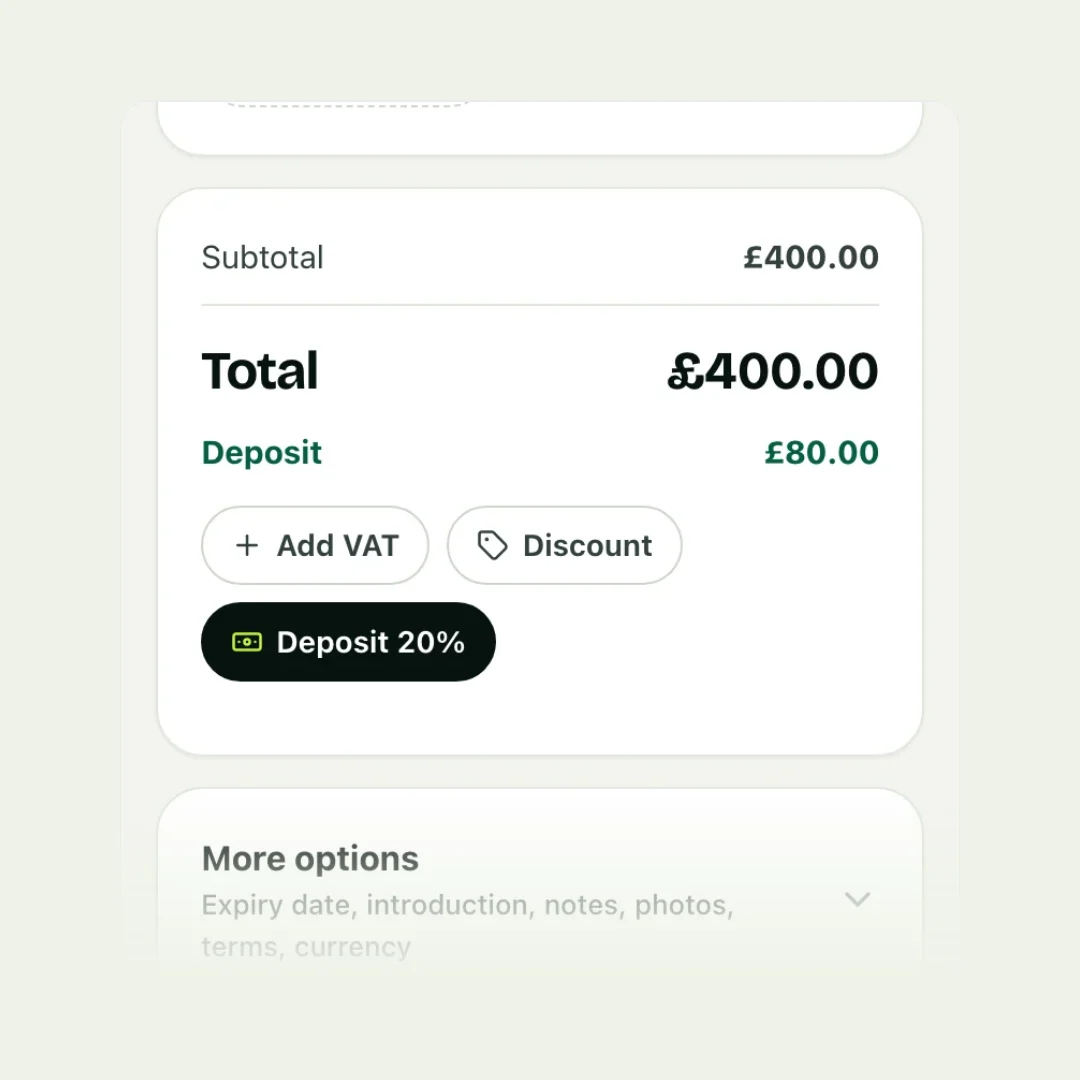
Most small businesses ask for a deposit of between 10% and 50% of the total. Ask for enough to cover what you spend before the job starts, such as materials or a date you turn other work away for, plus a little for the risk of a late cancellation. Put it on the quote, and make it payable in one step when the customer accepts.
Why take a deposit at all?
- It covers your costs when you buy materials or book help before the job.
- It holds the date for the customer, and stops you turning away work for a booking that disappears.
- It turns a yes into a commitment. Customers who have paid a deposit cancel far less often.
- It shows you run a proper business, which most customers find reassuring rather than off-putting.
How much deposit is normal?
These are ranges commonly used by small businesses, not rules. Use them as a starting point, then adjust for your own costs.
| Kind of work | Typical deposit | Why |
|---|---|---|
| One-off cleans | 20% to 50% | Holds the slot; small jobs often paid in full |
| Gardens and landscaping | 20% to 30% | Plants, turf and materials bought ahead |
| Trades and building | 10% to 25% | Materials; check local limits for home building |
| Photography and video | 25% to 50% | A date held, often months ahead |
| Beauty and bridal | 20% to 50% | Appointments held, trials booked |
| Catering and events | 25% to 50% | Dates held, food and staff booked |
| Freelance and consulting | 25% to 50% | Time reserved; more for new clients |
How to work out your own figure
Ask three questions:
- What will I spend before I start? Materials, hire, a second pair of hands.
- What does a cancellation cost me? A Saturday in June turned away for a wedding that falls through is worth more than a Tuesday in February.
- How well do I know this customer? New customers and large jobs justify a larger deposit.
For example, a garden makeover priced at £1,200 needs £300 of plants and turf bought the week before, and takes a day out of your diary. A 25% deposit of £300 covers the materials, so if the customer cancels late you are not left paying for them.
A percentage or a fixed amount?
A percentage scales with the job, which suits work that varies in size. A fixed amount, such as a £50 booking fee, is simpler for small, regular jobs and appointments. Whichever you use, show the amount in money on the quote, not only the percentage, so the customer knows exactly what to pay.
When to ask for it
On the quote, before the customer says yes. A deposit that appears after acceptance feels like a new condition; one that was on the quote is simply part of the deal. Then make the rule simple: the job is booked when the deposit is paid. For long or expensive jobs, follow the deposit with stage payments rather than one large deposit.
How to ask for a deposit politely
Asking for money is easier when it is matter-of-fact. These are written to be copied and adapted.
When a customer pushes back
Most pushback is about trust, not money. Explain what the deposit is for, and offer a choice rather than dropping it:
For small jobs from regular customers, you may decide a deposit isn’t needed. That is a business decision, not a weakness: just make it on purpose.
Refunds, cancellations and local rules
Say on the quote what happens to the deposit if the customer cancels, and if you do. Keeping a deposit that covers costs you have already paid out is fair; keeping one when you have lost nothing is harder to justify.
Common mistakes
- Mentioning the deposit only after the customer accepts.
- A percentage with no amount, so the customer has to work it out.
- No easy way to pay, so a willing customer puts it off.
- Starting before it arrives, which makes the deposit pointless.
- “Non-refundable” in bold without checking whether that holds where you work.
The easy way: deposits paid on the spot
| By hand | With Gugab | |
|---|---|---|
| Asking | An awkward extra message | On the quote, before they say yes |
| Paying | Bank details and a reference | Card, from the quote itself |
| Chasing | You remember to ask | Up to two reminders by email (Pro) |
| Receipt | Written by you | Made for you |
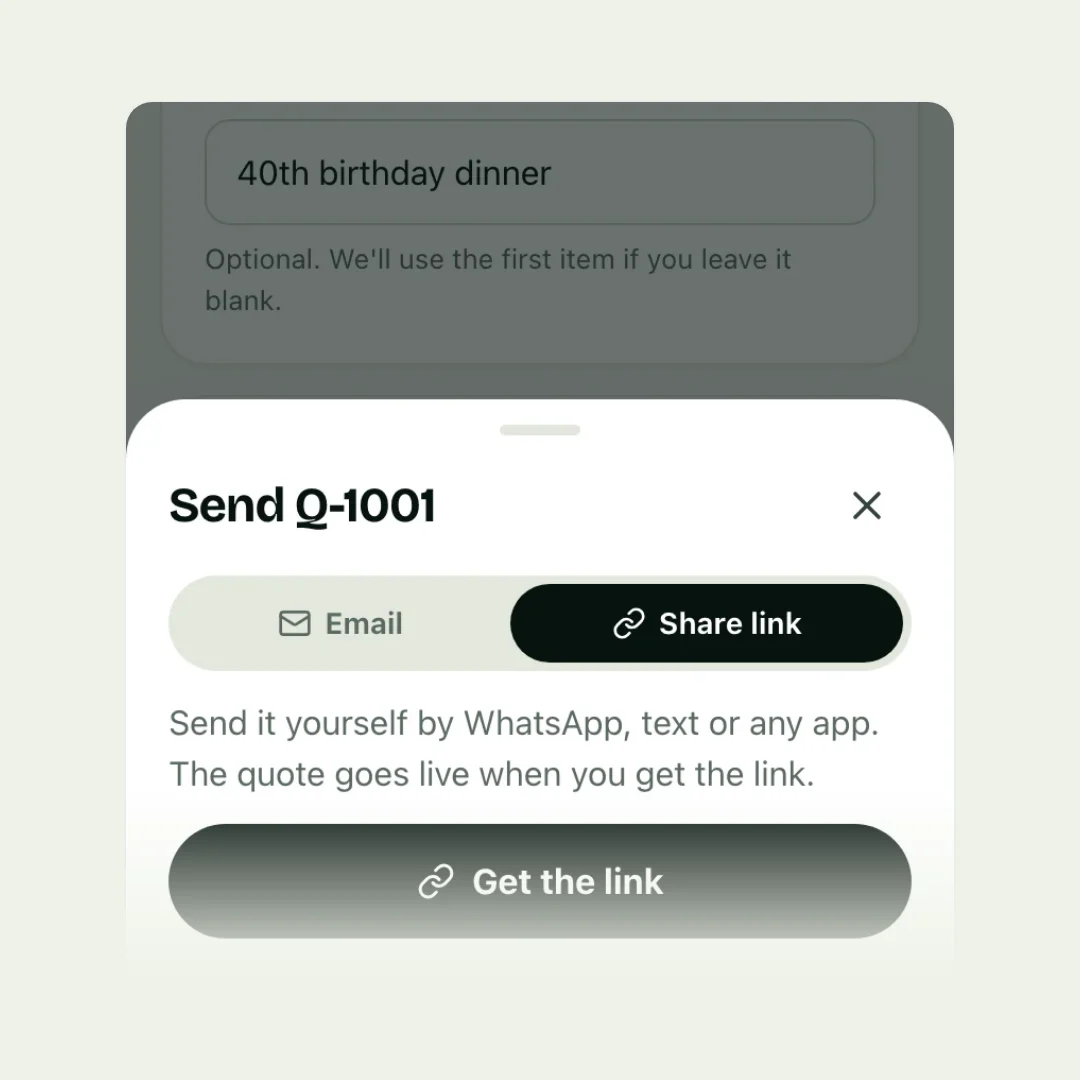
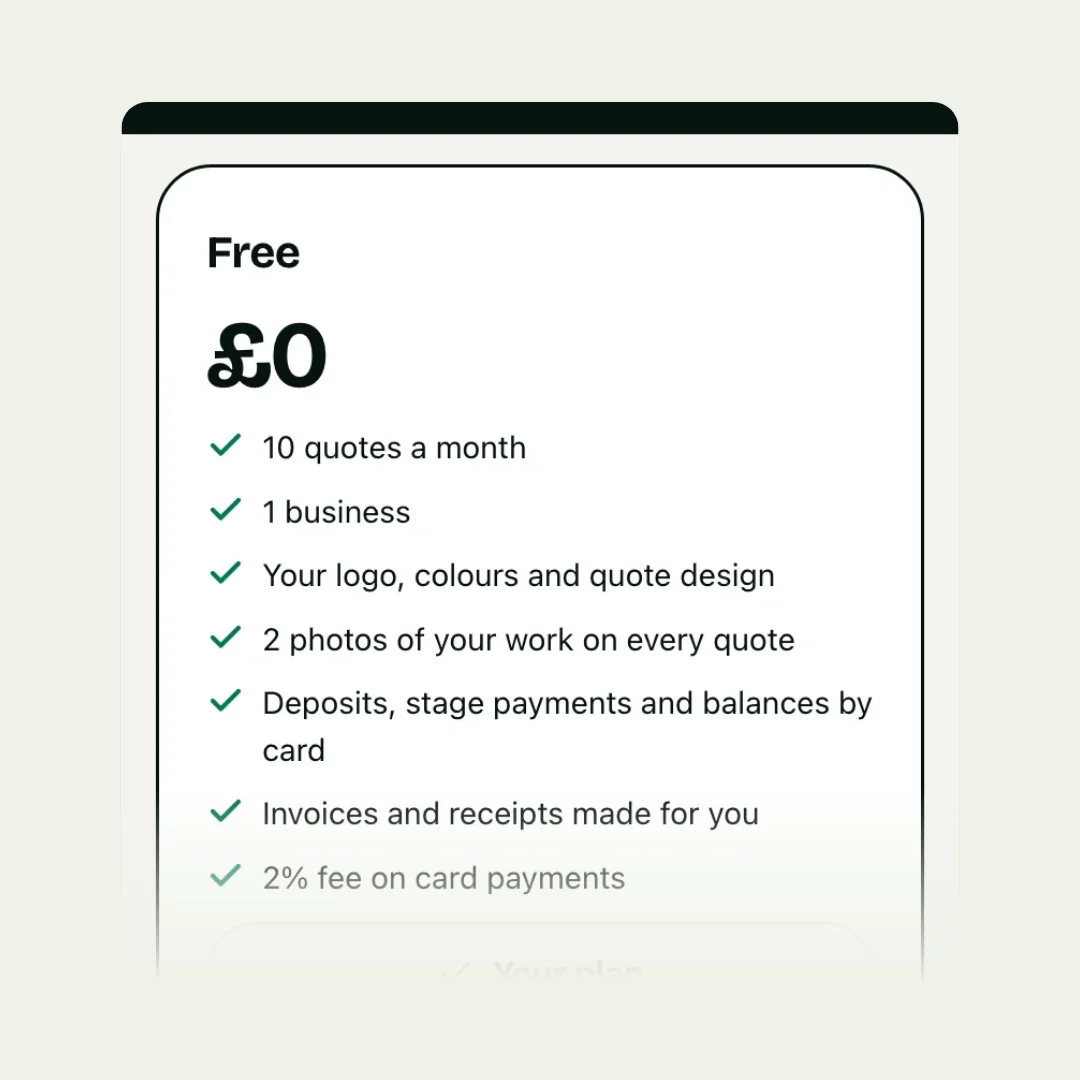
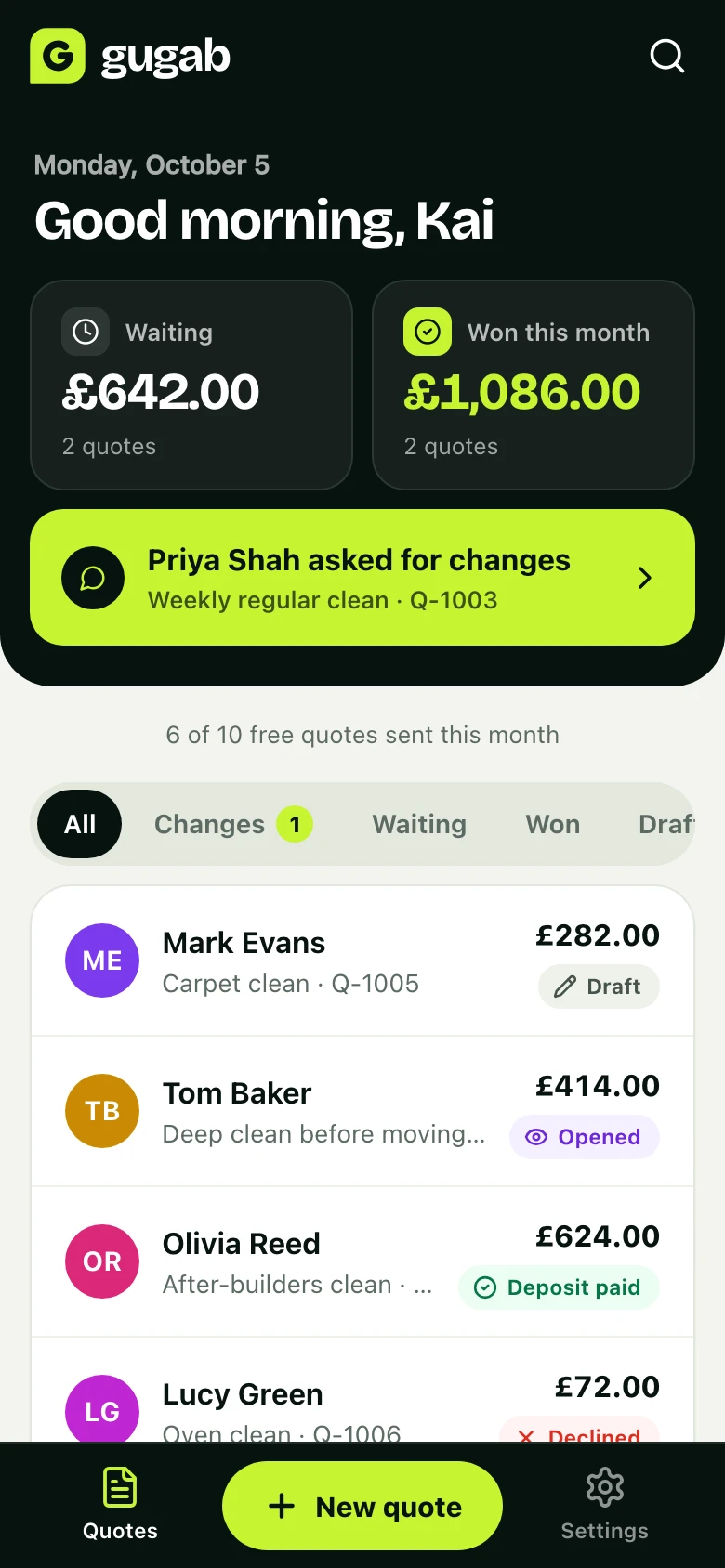
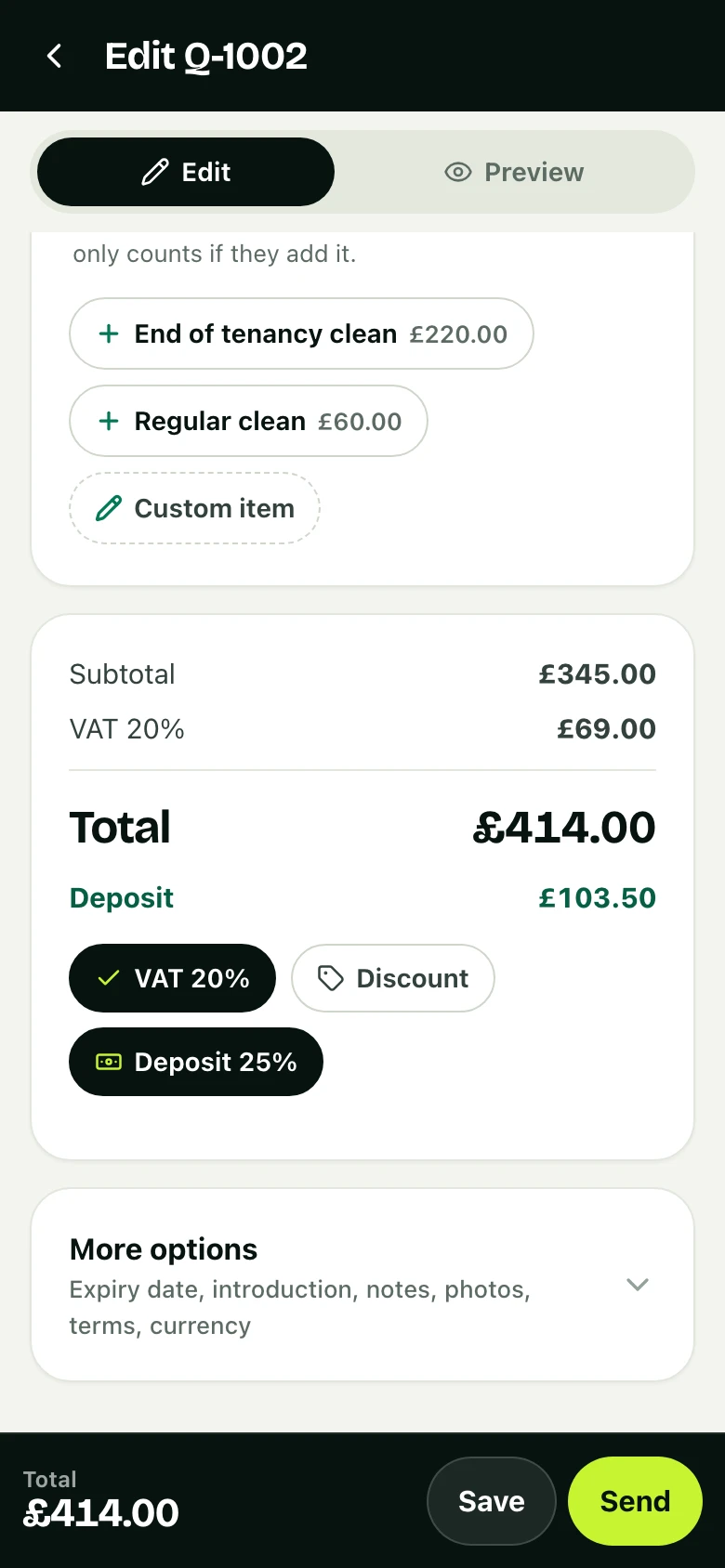
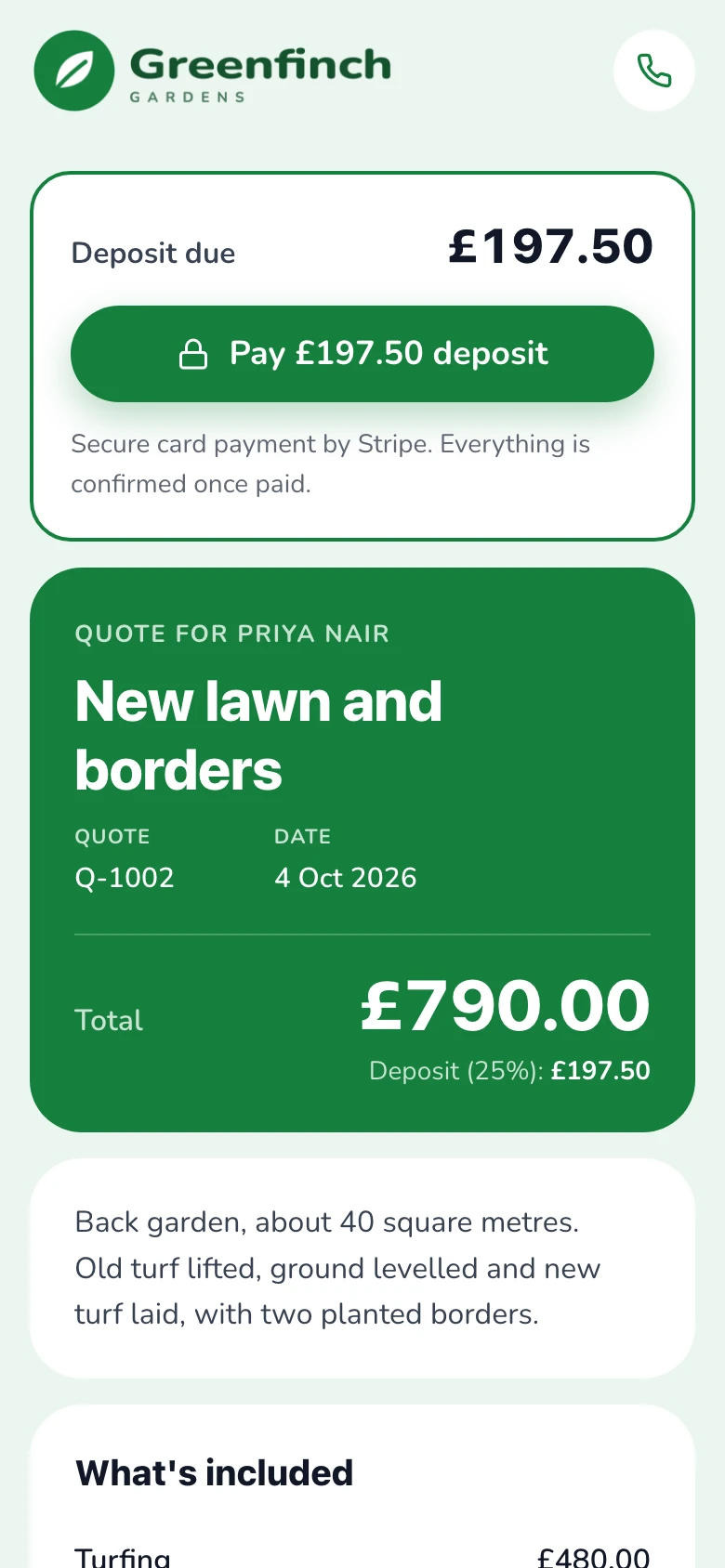
In Gugab you switch on a deposit when you write the quote, as a percentage or a fixed amount, and the quote shows the amount to book. When the customer accepts, a Pay deposit button is right there: they pay by card through Stripe, the money goes to your own Stripe account, and you are told straight away. On Pro, customers who accept but don’t pay get up to two reminders by email.
Questions people ask
Is it legal to ask for a deposit?
In most places, yes, and it is normal practice. Some places limit deposits for particular work, especially home building, so check the rules for your trade and area.
Are deposits refundable?
It depends on your terms and on local consumer law. A deposit that covers costs you have already paid out is easier to keep if a customer cancels. In some countries consumers have a right to cancel certain contracts within a set period, so don't promise or assume a deposit is non-refundable without checking.
What is the difference between a deposit and a booking fee?
They are often used to mean the same thing: money paid up front to secure a date or start the work, which comes off the final bill. Say on the quote whether it does come off the total, so nobody is confused.
Does tax apply to a deposit?
Often, yes: in many tax systems tax becomes due when you receive a payment, including a deposit. Ask your accountant how it works where you are.
What if the job changes after the deposit is paid?
Agree the new price, then adjust what is left to pay. The deposit simply comes off the new total.
How do I take a deposit by card?
Use a payment link or a quote tool that takes card payments, so the customer can pay the moment they accept. Money paid by card arrives in your account on your provider's normal schedule.