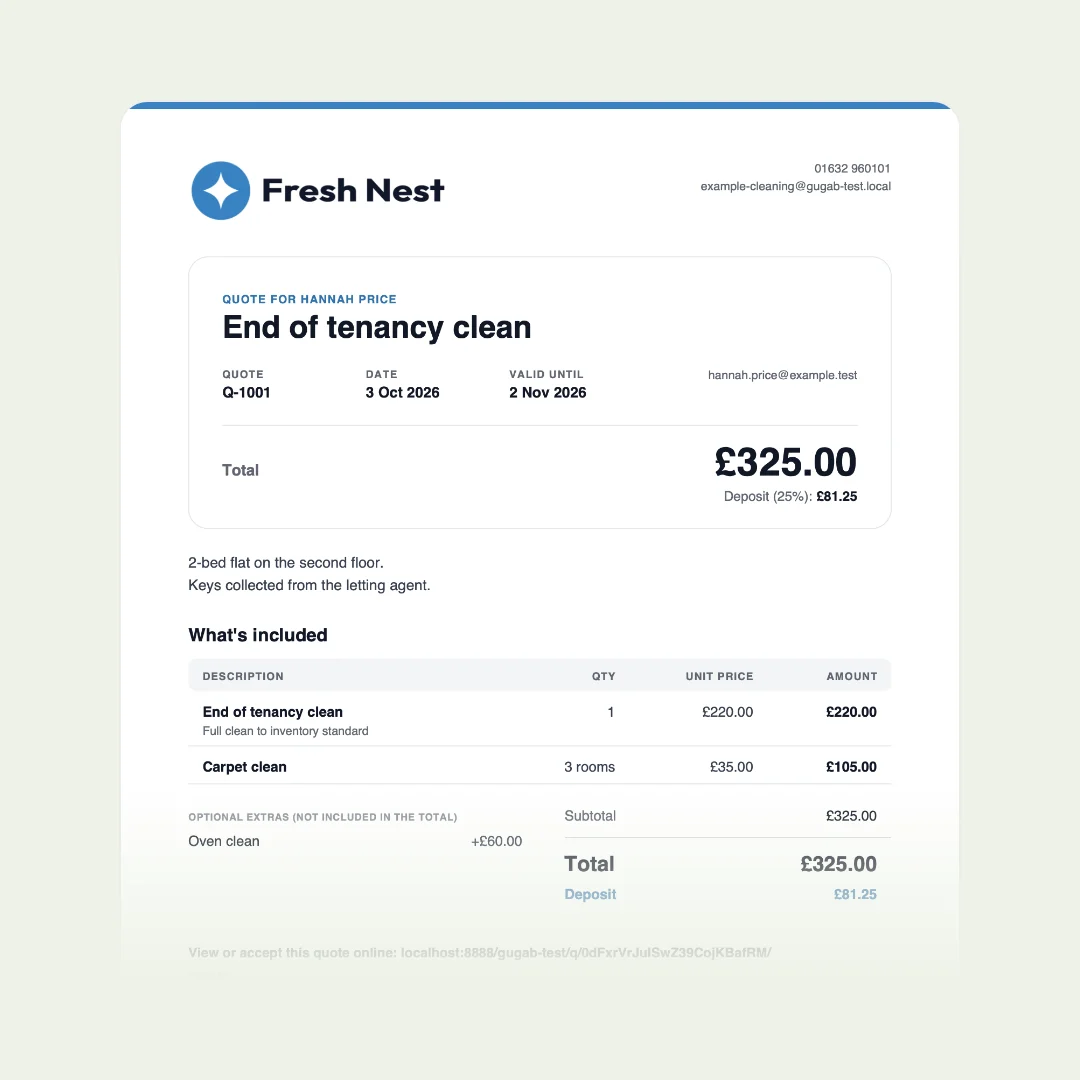
A quote is a fixed price for a job you have defined: if the customer accepts it, that is what they pay. An estimate is your informed guess at the price, which can change once the work starts. Give a quote when you can see the whole job, and an estimate when you can’t, and say clearly which one you are giving.
Customers use the two words as if they mean the same thing. They don’t, and the difference is what most price arguments are about.
The difference at a glance
| Quote | Estimate | |
|---|---|---|
| The price | Fixed | A guess or a range |
| Can it change? | Only if you both agree | Yes, for the reasons you give |
| Best for | Jobs you can see in full | Jobs with unknowns |
| The customer expects | To pay exactly that | To pay about that |
| How it is accepted | Yes to the price | Yes to the work, price to follow |
When to give a quote
Give a quote whenever you can see the whole job and price every part of it: a clean, a garden tidy, a photo shoot, a set of treatments, a catered event with a known number of guests, a piece of design work with a clear brief. Most small businesses can quote most of their work.
Customers prefer quotes because they can compare them and plan. A fixed price also protects you: once it is accepted, the price is agreed.
When to give an estimate
Give an estimate when part of the job is hidden or depends on something you can’t know yet: what is behind a wall, how much a garden needs clearing once it is cut back, how many hours a problem will take to find. It is also right when the customer wants a rough figure before deciding whether to go further.
An estimate is not a way to avoid committing. If you could quote, quote.
How to word an estimate so nobody is surprised
An estimate goes wrong when the customer remembers a number and forgets the “about”. Make it hard to forget:
- Give a range, not a single figure.
- Say what the range assumes, so it is clear what would change it.
- Name what could push it up, and roughly by how much.
- Promise to warn them before you go over, so they decide.
Turning an estimate into a quote
As soon as the unknowns are known, replace the estimate with a fixed quote. A common pattern is to quote the first, visible stage of the work, then quote the rest once you can see it. The customer gets certainty in steps, and you never commit to a price for work you haven’t seen.
If the job is long, pair this with stage payments, so each stage is paid for as it is done.
Is a quote legally binding?
In many countries a quote is an offer, and once the customer accepts it you have an agreement at that price. An estimate usually is not a fixed price, but it still sets expectations. What matters most is what the document actually says, not whether it is headed “quote” or “estimate”.
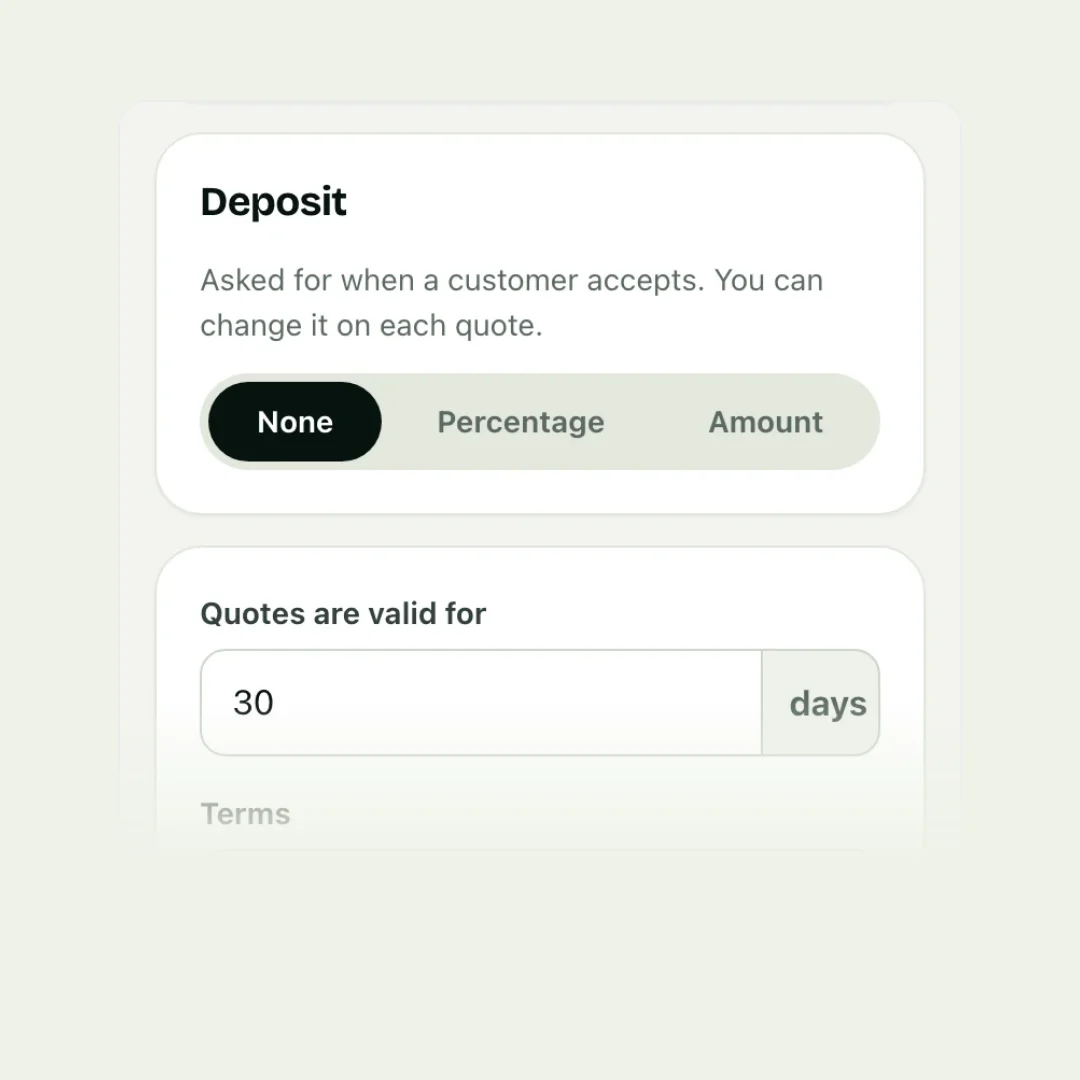
Whatever the rules, three habits keep you safe: put the price and what it covers in writing, give a date it is valid until, and agree any change in writing before you do the extra work.
Common mistakes
- Calling a guess a quote, then finding the job is bigger.
- Giving one figure as an estimate, which the customer remembers as a price.
- Not saying what changes the estimate, so every increase looks like a surprise.
- Going over without warning. Ask first, every time.
The easy way: fixed prices, accepted in writing
| By hand | With Gugab | |
|---|---|---|
| What was agreed | Emails and memory | Every line, on the quote they accepted |
| When they agreed | Somewhere in your messages | Recorded with their name |
| A change | A new document to send | Edit the quote; same link |
| Valid until | Easy to forget | On every quote, with a reminder (Pro) |
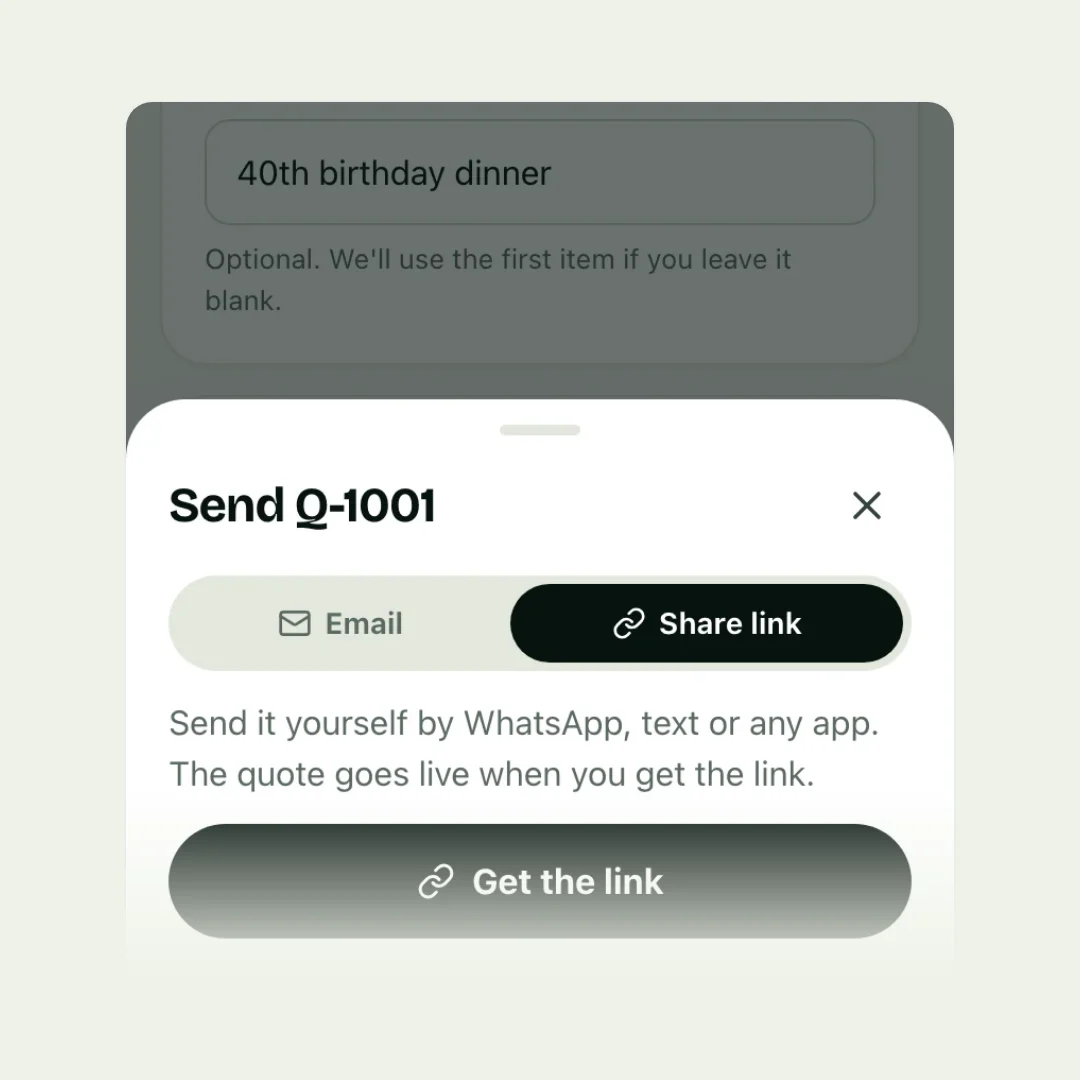
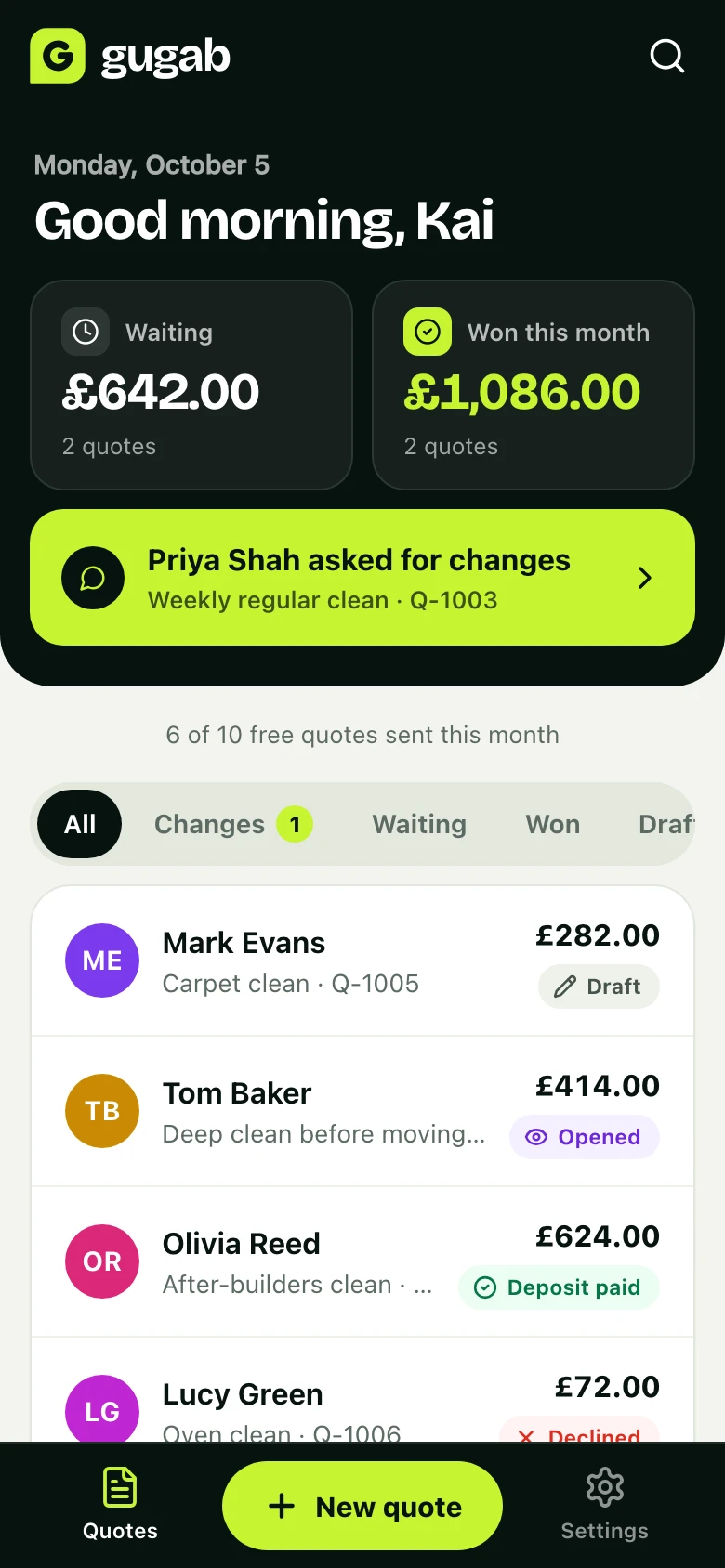
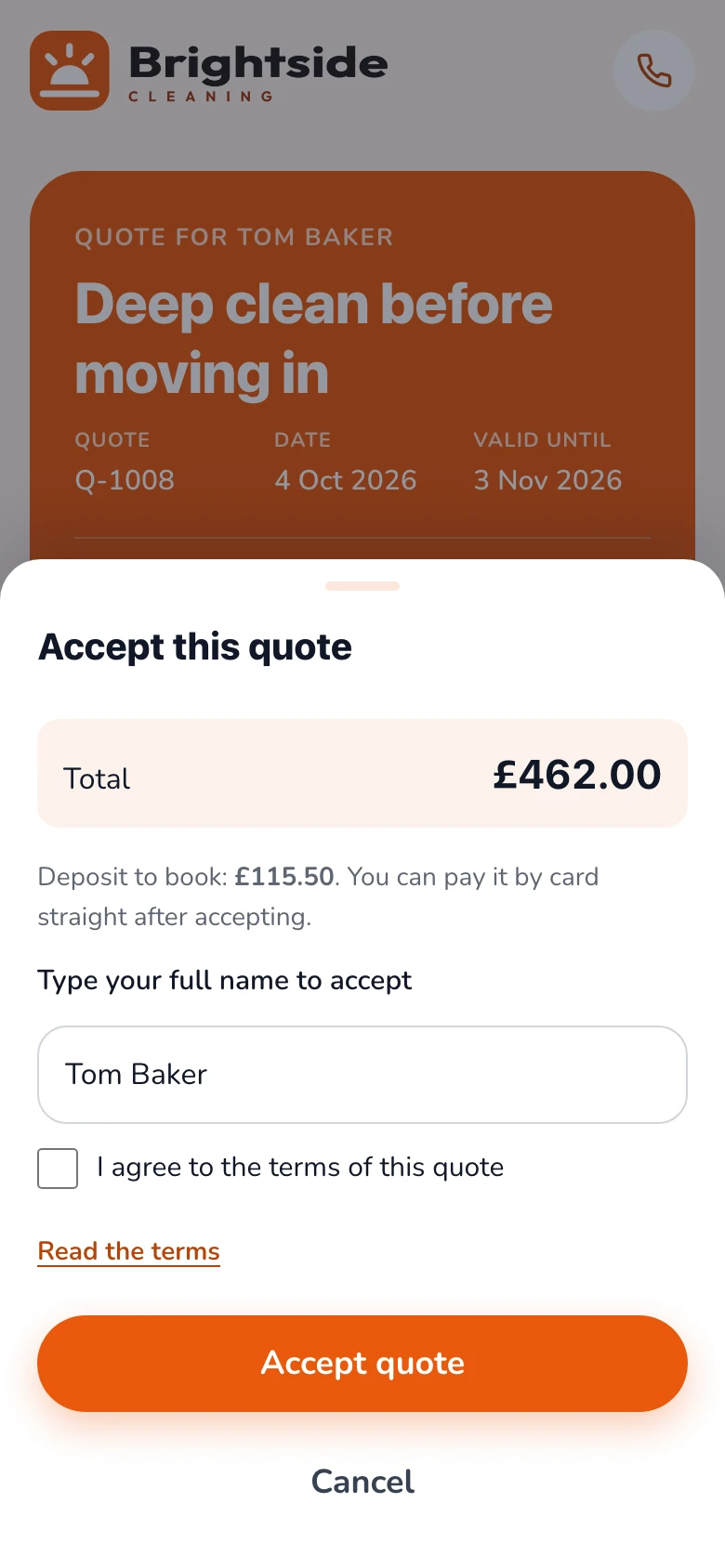
Gugab sends quotes: fixed prices with every line shown, a date they are valid until and your terms. The customer accepts by typing their name, so there is a clear record of exactly what they agreed to and when. If the job changes, you edit the quote and they see the new version on the same link.
Questions people ask
Is an estimate legally binding?
Usually not as a fixed price, because it says the price may change. But an estimate can still create expectations, so if the final bill is far above it, many consumer rules expect you to have warned the customer and agreed the change. Check the rules where you work.
Can a quote change after it is accepted?
Only by agreement. If the customer asks for more, or you find something neither of you knew about, agree the change and its price in writing before you do the extra work.
How far over an estimate can I go?
There is no single rule, and advice online varies widely. The safe approach is to give a range, say what could push the price up, and tell the customer before you go over, so they can decide.
Should I charge for an estimate?
Quick estimates are usually free. If working out the price takes real time, such as a survey or a detailed design, a fee that comes off the final bill is common.
What about bids and proposals?
A bid is a quote submitted in competition, often for a tender. A proposal is a longer document that explains your approach as well as the price, common in consulting and creative work. Both still need a clear price and terms.
Which should I give for a small job?
A quote, nearly always. Small jobs are easy to see in full, and customers prefer knowing the exact price.