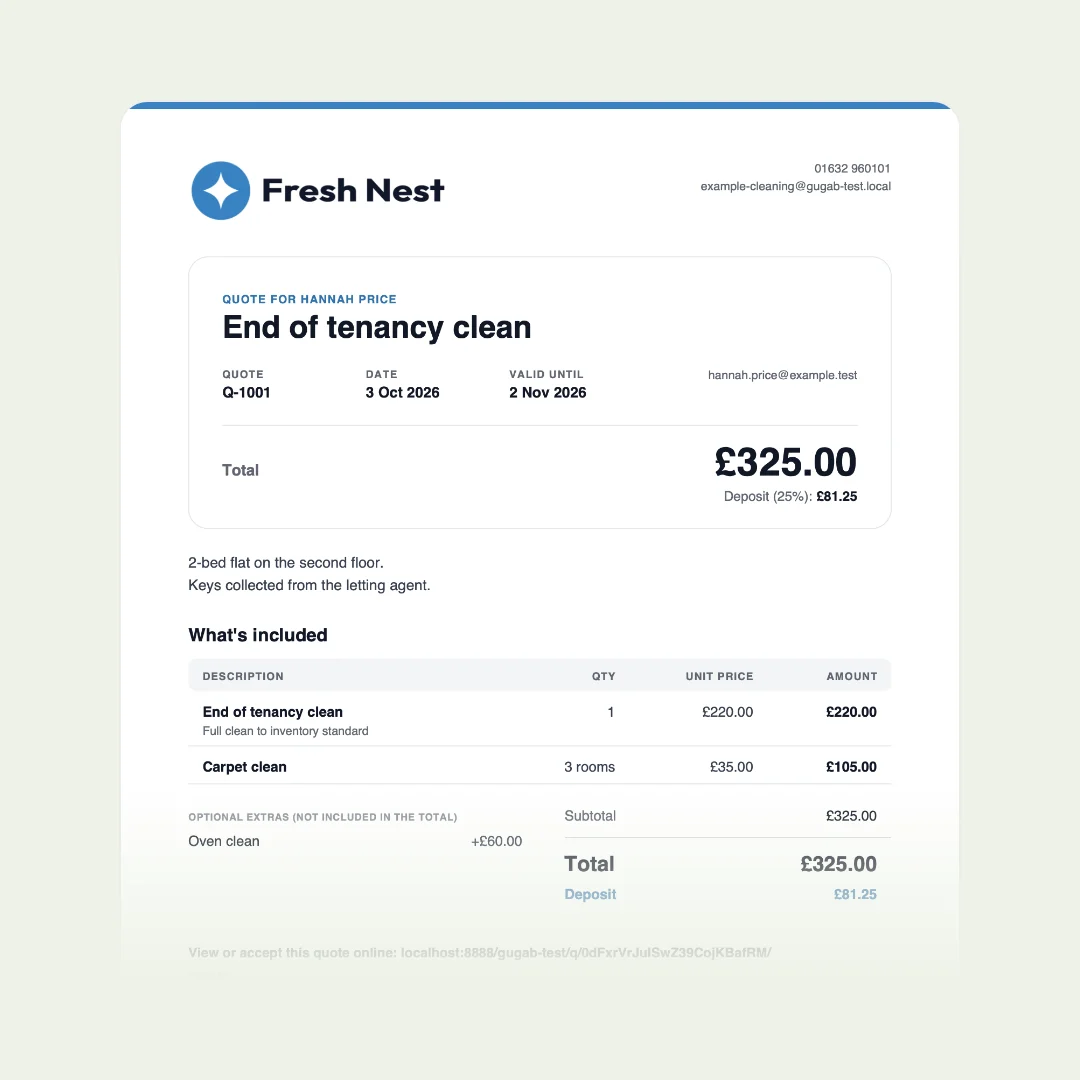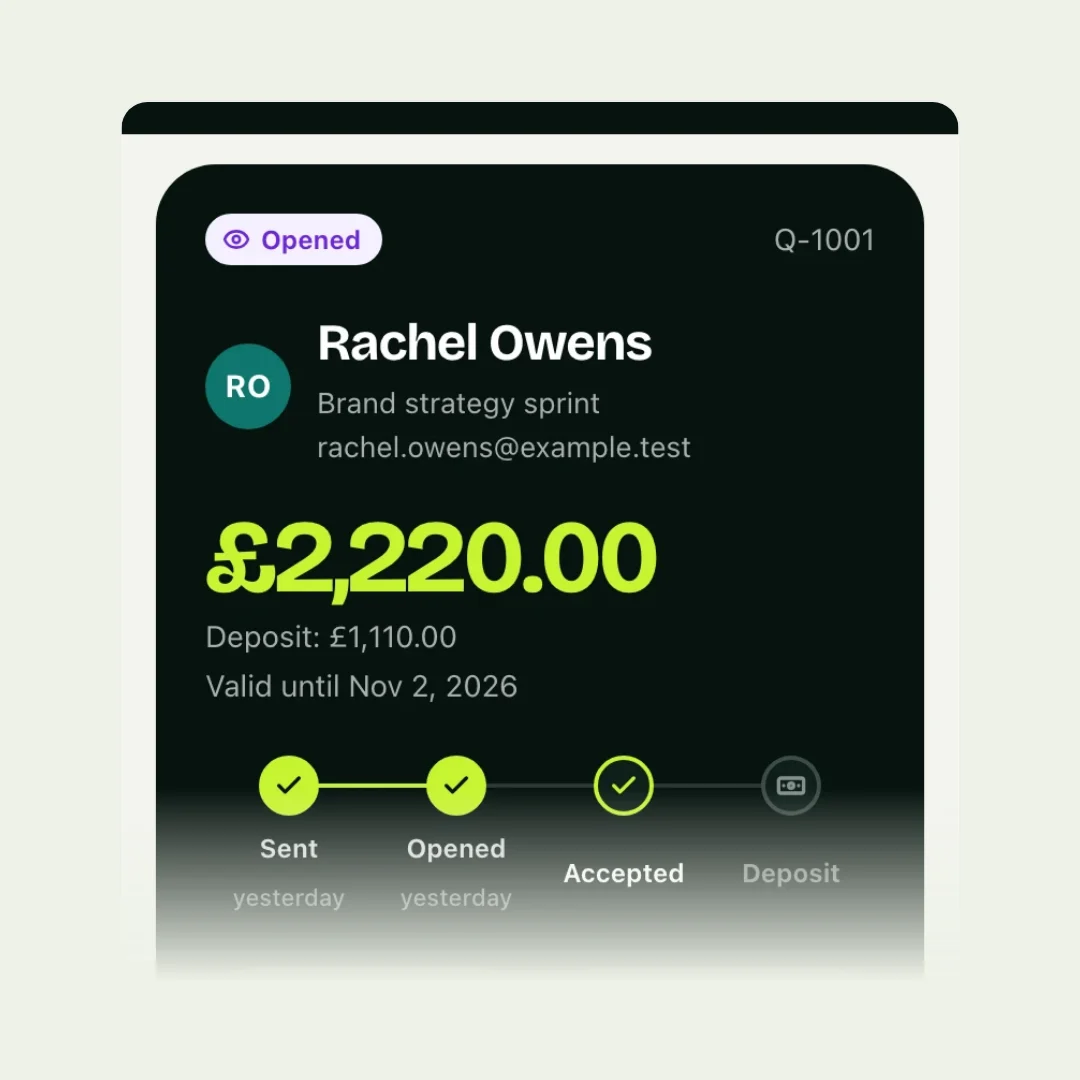
Follow up on a quote two or three days after sending it, with a short, friendly message that asks if they have any questions and links straight to the quote. Send a second message a couple of days before the quote runs out, and a final one that closes the loop. Keep each message short, make answering easy, and stop after three.
Why customers go quiet
Silence feels like a no. It rarely is. Customers go quiet because:
- they are busy, and meant to reply;
- they are waiting for other quotes to compare;
- they need to check with someone else, a partner or a manager;
- they have a question they haven’t got round to asking;
- the price was more than they expected, and they don’t want to say so.
Each of those is answered by a helpful message. That is all a good follow-up is.
A follow-up schedule that works
| When | What | How |
|---|---|---|
| Same day | Send the quote, with a short note | Email or link by text |
| Day 2 or 3 | Friendly check-in: any questions? | Text, WhatsApp or email |
| 2 days before it expires | Reminder of the date, offer to hold it | |
| After it expires | Close the loop, leave the door open | Email or text |
Adjust the gaps to the job. A burst pipe needs an answer today; a wedding caterer can allow a week.
What to say: scripts to copy
The first check-in
Before the quote runs out
Closing the loop
That last message often gets a reply. It is polite, it takes the pressure off, and it gives the customer an easy way back.
On the phone
For bigger quotes, a call is worth making. Keep it short: say who you are and which quote, ask if they had a chance to look, ask if anything needs explaining, and agree a next step, even if it is “I’ll check back next week”.
Use what you know about the quote
If you can see whether the customer has opened the quote, use it to choose your message, though never mention that you saw it.
- Not opened: it may be in spam or forgotten. Resend the link by text or WhatsApp.
- Opened, no reply: they are thinking or comparing. Offer to answer questions or adjust the quote.
- They asked for changes: reply the same day with the updated quote. Speed here wins the job.
- It has nearly run out: the valid-until date is your reason to get in touch.
Common mistakes
- Not following up at all. Many jobs are lost simply because nobody asked.
- “Just checking in” with nothing to answer. Ask one clear question instead.
- No link. Make the customer hunt for your quote and they won’t.
- Dropping the price unprompted. It tells them your first price wasn’t real.
- Too many messages. Three, spaced out, is plenty.
The easy way: follow-ups that send themselves
| By hand | With Gugab | |
|---|---|---|
| Knowing when to chase | Guesswork | Told when they open it |
| The first follow-up | In your diary, if you remember | Sent for you after 3 days (Pro) |
| Before it expires | Easy to miss | A reminder 2 days before (Pro) |
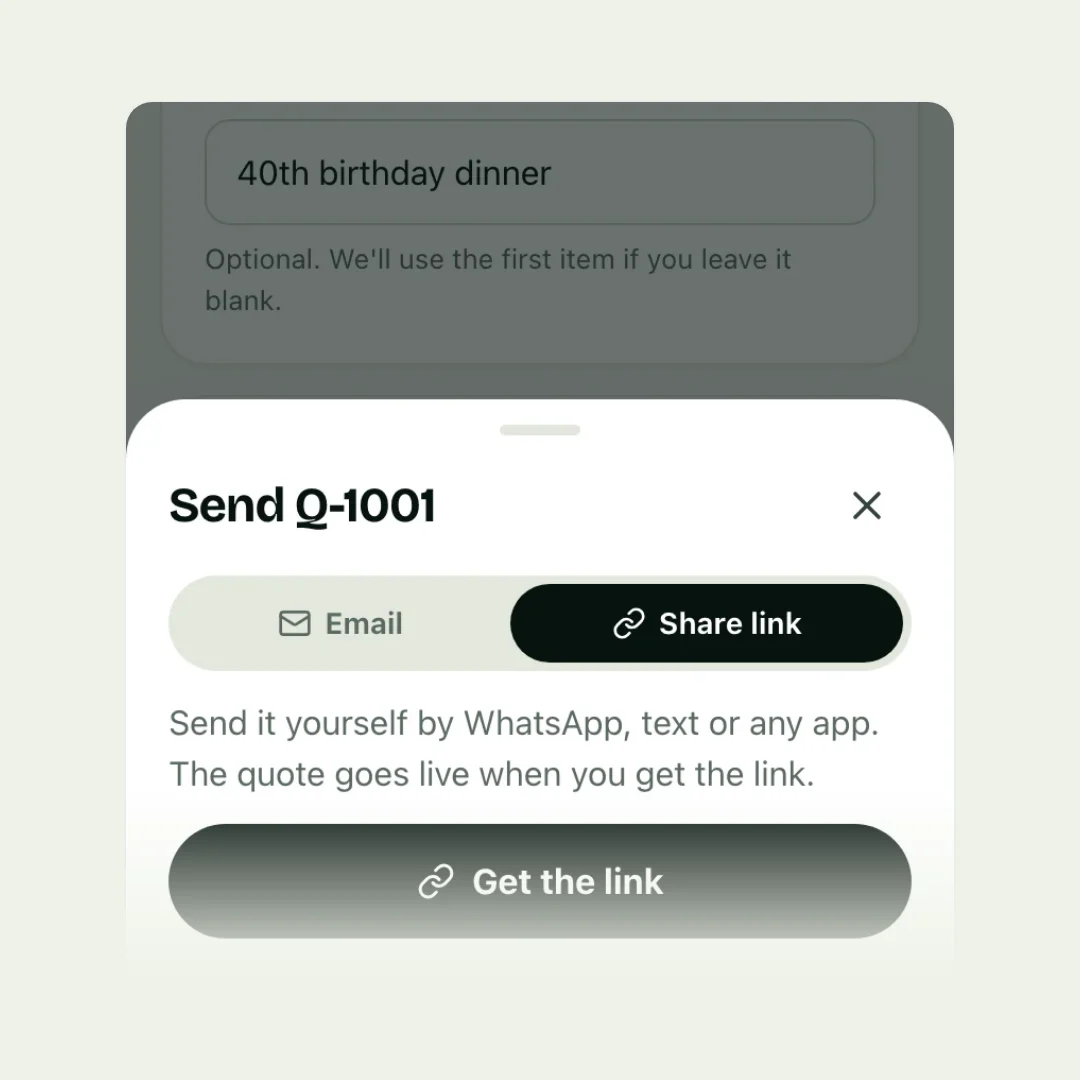
| Sending the link again | Find the file, attach it | One tap to WhatsApp or text |
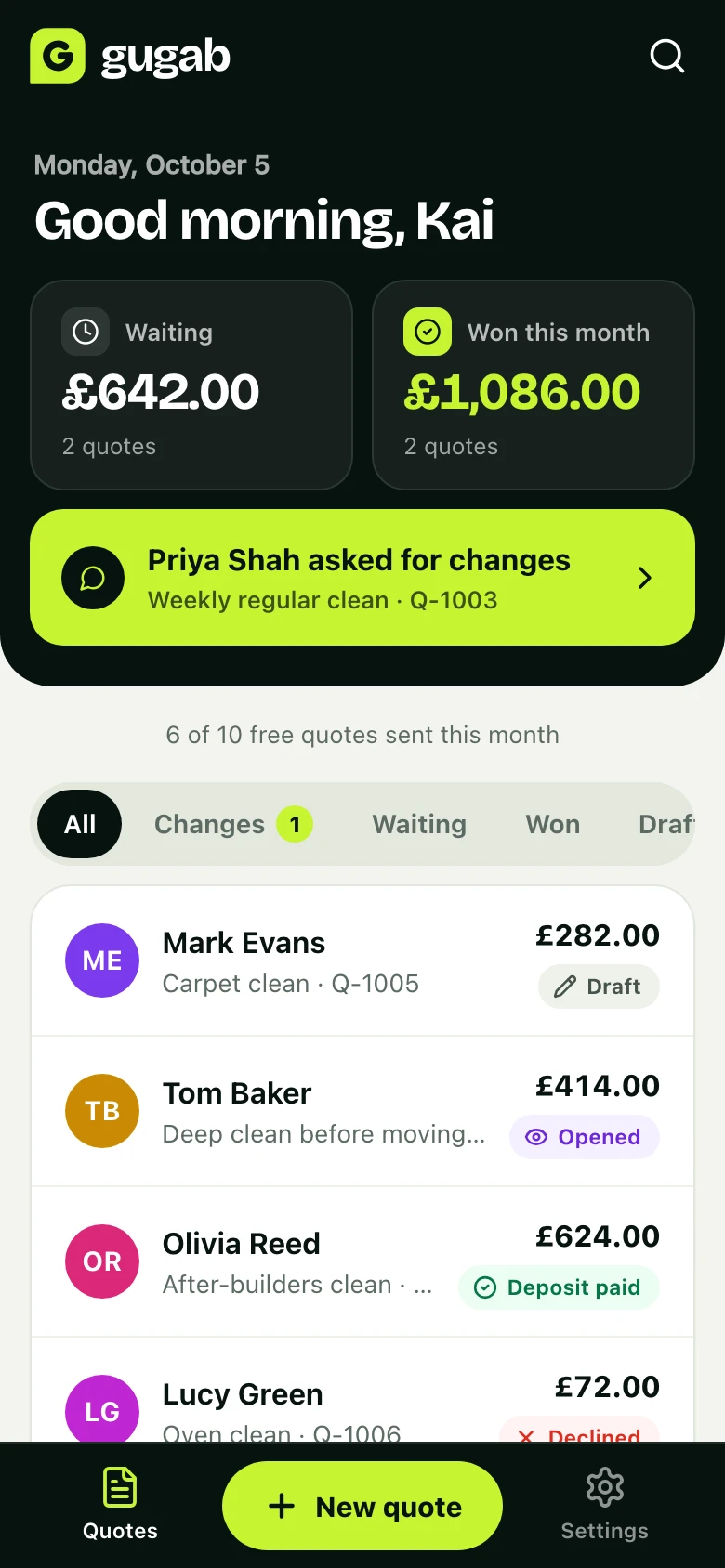
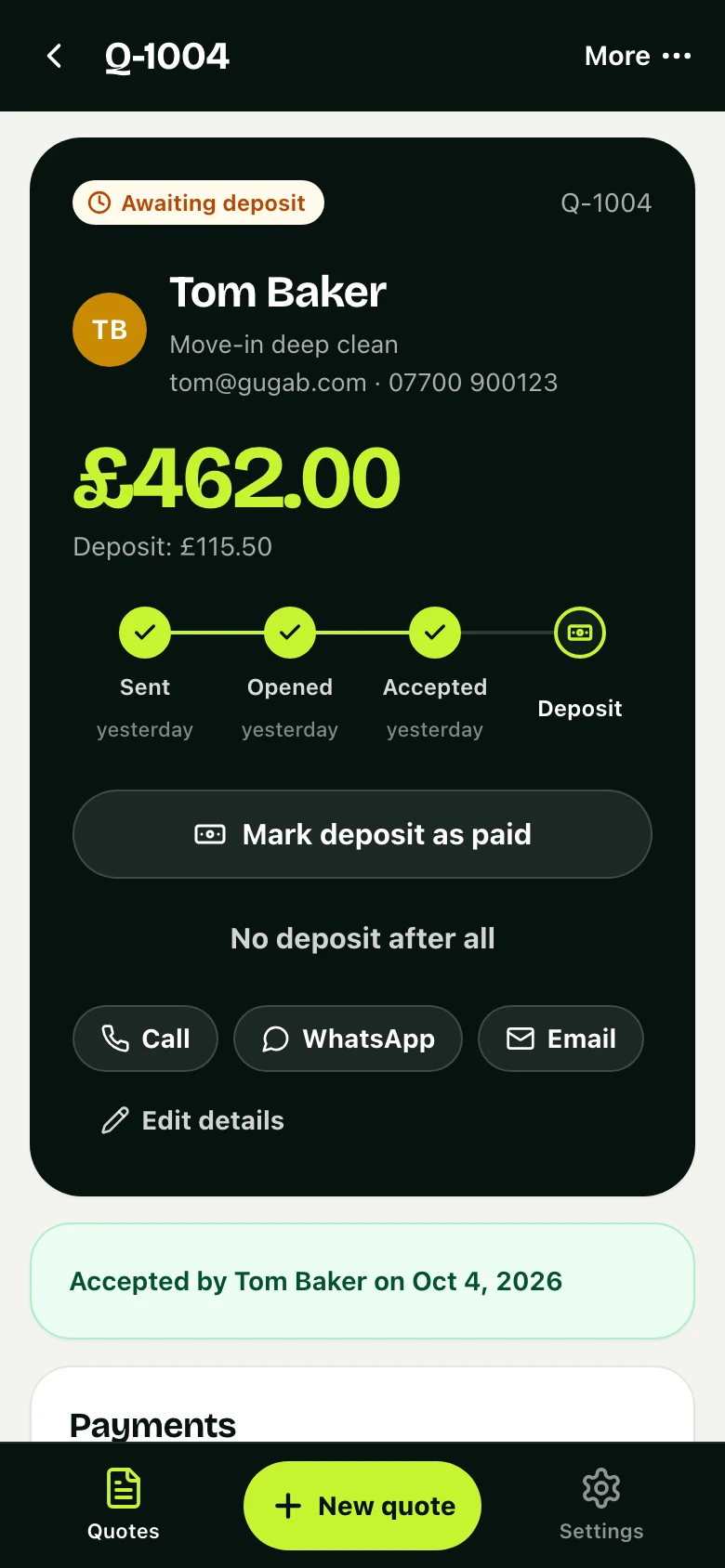
In Gugab every quote shows where it stands: sent, opened, accepted, deposit paid. You get an email when the customer opens it, accepts, declines or asks for changes. On Pro, a polite follow-up goes to the customer by itself three days after sending if they haven’t answered, and a reminder two days before the quote runs out, so the first two messages in the schedule above are sent for you.
Questions people ask
How long should I wait before following up?
Two or three days for most jobs. Sooner for urgent work, such as a repair, and a little longer for big decisions, such as a wedding or an extension. Never longer than a week for the first message.
How many times should I follow up?
Two or three times is usually enough: a friendly check-in, a reminder before the quote runs out, and a final message that closes the loop. After that, leave the door open and move on.
Email, text or phone?
Use the channel the customer used to contact you. Texts and WhatsApp messages are read quickly; email suits longer jobs and businesses; a phone call works well for bigger quotes or when a customer has questions.
They opened the quote but haven't replied. What do I say?
Assume they have a question or are comparing. Ask whether anything needs explaining or changing, and offer a quick call. Don't mention that you saw them open it.
What if they say it is too expensive?
Ask what they were hoping to spend, then offer a smaller version of the job or remove an optional part, rather than cutting your price for the same work.
Is it pushy to follow up?
Not if it is helpful and brief. A follow-up that answers a question or reminds them of a deadline is a service. Daily messages are pushy; two or three spaced out are normal.